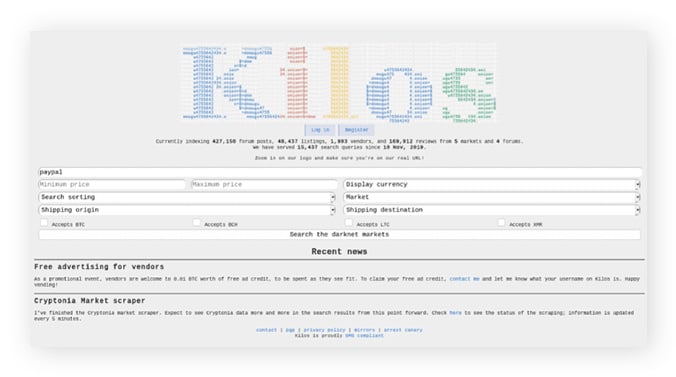

It has onion links you cannot access with regular browsers like Chrome, Firefox, Edge, or Safari. Check out these best onion sites to access the dark web securely and anonymously. You can think of The Hidden Wiki as the Dark Web version of Wikipedia, simplifying Tor browsing with a categorized list of direct links to both .onion sites and surface web pages. Haystak is a Dark Web search engine designed for the Tor network.
Dark Web Search Engines
Finding that data quickly via search can buy you time to respond. They state that they do not store user queries and you can search anonymously. Feature wise, DarkSearch does automated crawling of onion sites and combines it with user reporting.
- While you can access Ahmia results on a standard web browser, .onion links still require the Tor Browser to open.
- This area has turned to be a dependent source for years of journalists, researchers, and privacy-centric users who trust on anonymous networks like Tor and the principle of onion routing.
- Security teams that rely only on dark web search engines will miss threats.
- The search engine itself might be safe, but the links it gives you might not be.
The surface web, indexed by Google and Bing, represents only a fraction of the internet. Beneath lies the dark web, a hidden layer accessible only through specialized browsers like Tor. Navigating this opaque realm requires tools unlike conventional search engines. Dark web search engines serve as gateways to .onion sites, forums, and marketplaces that are deliberately concealed from public view. These engines operate under unique constraints, indexing content that is often ephemeral, encrypted, or intentionally obfuscated.
How Dark Web Search Engines Differ
Unlike mainstream crawlers that rely on open links and legal compliance, dark web search engines face technical hurdles. They must traverse Tor hidden services without revealing their own location, often using anonymized crawling nodes. A key example is Ahmia, which indexes only non-abusive .onion sites while blocking child exploitation material. Another is Torch, one of the oldest dark web search engines, claiming an index of over one million hidden pages. These tools prioritize privacy over user tracking, offering results without storing IP addresses or search histories.
The Role of Censorship and Reliability
Dark web search engines operate in a legal gray zone. While some like Haystak promote free speech by indexing controversial political content, others filter out illegal marketplaces to avoid shutdowns. DuckDuckGo, though surface-level, offers a Tor version that searches the clearnet but not .onion sites. For deep dark web access, specialized engines like Grams (now defunct) once indexed cryptocurrency-driven markets. Reliability is often poor—search results decay quickly as sites shut down or change addresses, requiring constant re-crawling.
Risks and Ethical Considerations
Using these engines carries inherent dangers. Fake results often lead to phishing sites or malware-distributing mirrors. Hidden Wiki, once a popular directory, is now riddled with scams. Responsible usage demands VPNs and strict security practices. Ethically, these tools empower journalists and activists in repressive regimes but also enable illicit trades. While no search engine can guarantee safety, understanding their limitations—such as incomplete indexes and manipulated listings—is crucial for anyone venturing into this digital underworld.