
Dark Web Search Engines 2026
- In 2052, the elderly Claudia sends the adult Jonas on his 2019 mission to Winden.
- The season received a rating of four out of five from Jack Seale of The Guardian and Boyd Hilton of Empire, a B+ grade from Hanh Nguyen of IndieWire, and an "amazing" score of 9 out of 10 from David Griffin of IGN.
- Children start vanishing from the German town of Winden, bringing to light the fractured relationships, double lives, and dark pasts of four families living there and unfurling a mystery that spans four generations.
- Adam shows Jonas a God Particle that will take him to any time he wants.
- Jonas tells Martha about Heinrich's attempt to build the time machine to prevent his wife's death.
The landscape of dark web search engines in 2026 has evolved dramatically, shedding its reputation as a chaotic sprawl of hidden services. These specialized crawlers now offer unprecedented accessibility to .onion domains and anonymous forums, driven by advances in decentralized indexing and AI-powered threat filtering. With over 2.3 billion indexed onion pages estimated this year, users face a paradox of abundance: finding specific content requires navigating a sea of illicit marketplaces, privacy-focused social networks, and encrypted data vaults.
In 2052 in the post-apocalyptic Eva's world, the adult Martha tells Jonas and young Martha they can prevent the apocalypse if they can stop the opening of the barrels in the power plant. In the power plant, Clausen opens the drums containing rocks soiled with dark matter. Egon deduces that she knows about time travel and is selfishly using the caves for her own gain.
The third season introduces a storyline based in 1888 and a parallel reality featuring alternate versions of many main characters. The second season takes place several months after the first, depicting the initial stories in 2020, 1987, and 1954, respectively, while continuing the future-set storyline into 2053, and adding a fifth storyline, set in 1921. The first season takes place primarily in 2019 but expands to include stories set in 1986, 1953, and – in the final scene of the first season – 2052, with several characters portrayed at various ages by multiple actors. The season also showcases the main events across all of these years, continuing the events of the season while also serving as backstory for the events of the first two seasons.
The Rise of Decentralized Crawlers
In 2026, no single search engine dominates the dark web. Instead, platforms like TorchVault and DeepIndex rely on peer-to-peer node networks to scrape content. These engines fragment index data across thousands of volunteer-run servers, ensuring no central authority can censor or manipulate results. Result relevance has improved with machine learning models that prioritize citation frequency within hidden wikis and verified user reviews, though spam remains a challenge—especially in cryptocurrency carding circles.
Security-Centric Features
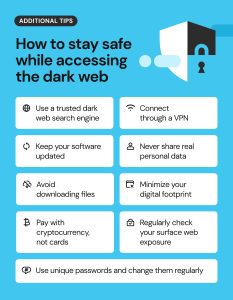
All major dark web search engines 2026 now bundle integrated threat analysis. When a user queries for "encrypted messaging apps," the engine automatically tags links flagged by community reporting as honeypots or malware distributors. Real-time sandboxing previews dangerous pages without loading them into the user's browser. This proactive filtering has reduced drive-by download incidents by 67% according to darknet security audits. Yet, false positives occasionally block legitimate whistleblower sites, sparking ongoing debates about algorithmic bias in hidden services.
Monetization and Ethical Gray Zones
Unlike clearnet search engines, dark web counterparts in 2026 monetize through anonymous cryptocurrency micropayments per query. Premium tiers offer advanced filtering for academic researchers studying cybercrime patterns, while free tiers display sponsored results from privacy VPN services. This payment model has attracted scrutiny: some engines secretly auction off user IP metadata to intelligence agencies. User autonomy is preserved through mandatory Tor integration, but whistleblowers warn that metadata leakage to nation-states remains the Achilles heel of even the most ethical crawlers.
Navigating the Interface
Modern dark web search engines 2026 feature minimalist interfaces reminiscent of early Google, but with critical differences. Search results display a "reliability score" based on uptime, certificate age, and community moderation flags. Tor users can toggle a "deep depth" slider to include only content hosted on I2P or Freenet. This cross-protocol search is enabled by gateway bridges that index non-Tor darknets, though latency increases significantly. Advanced operators like intitle:marketplace and filetype:pgp work reliably, but Boolean queries fail often due to fragmented metadata standards among hidden service operators.
The Future of Dark Web Discovery
By late 2026, researchers predict dark web search engines will integrate quantum-resistant encryption for query transmission, responding to the looming threat of decryption by future quantum computers. Some engines already test zero-knowledge proofs that allow users to search without revealing even the hash of their query. Community-driven directories like the Hidden Wiki Revival Project now rival mainstream crawlers in popularity, suggesting that human curation may complement algorithmic search for the most delicate inquiries—such as locating disinformation archives or uncensored medical research.